|
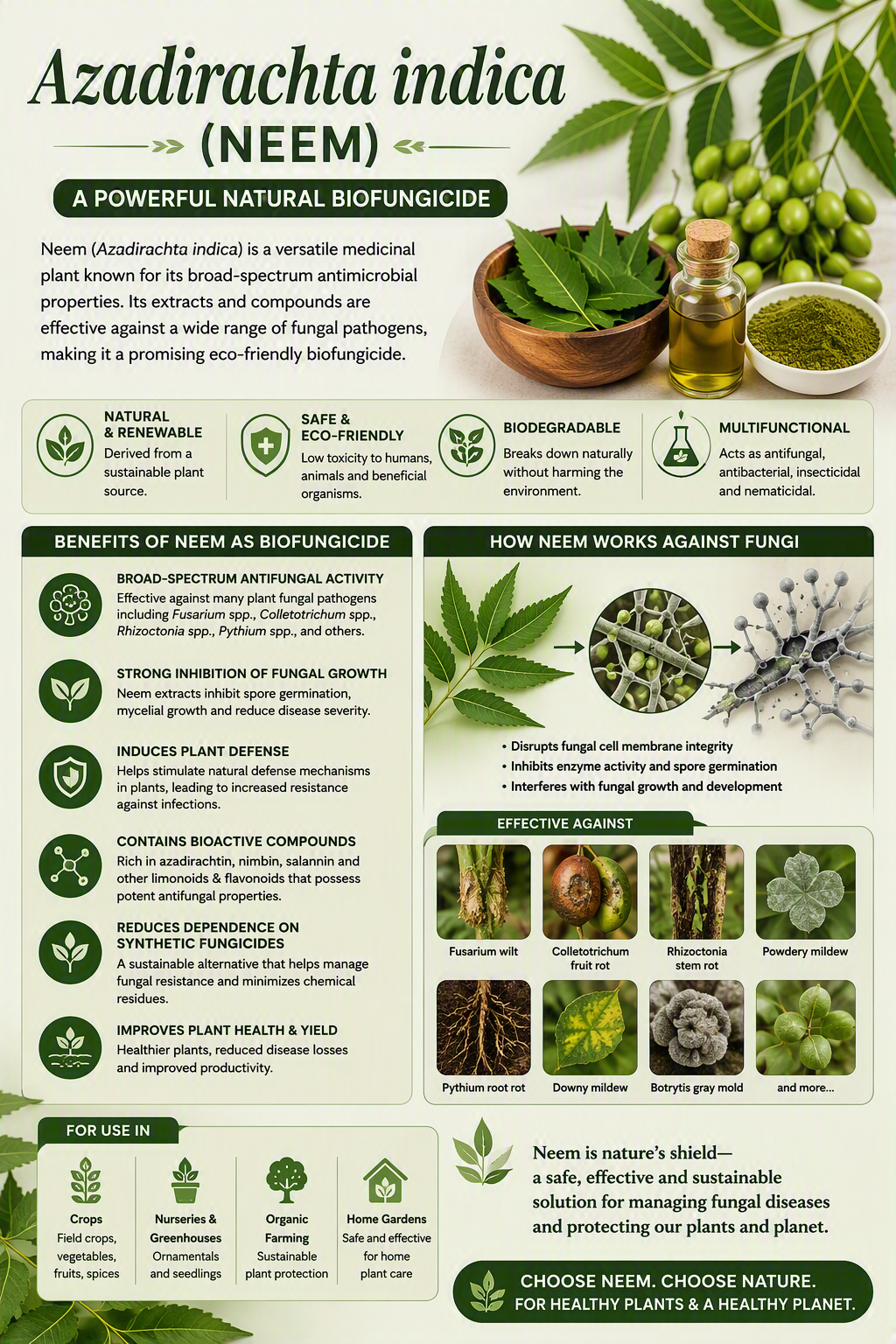
The antifungal activities of methanol extract from seven plant species, namely Plectranthus amboinicus (Mexican mint), Morinda citrifolia (noni), Clitoria ternatea (butterfly pea), Passiflora suberosa (corkystem passionflower), Azadirachta indica (neem), Moringa oleifera (ben oil tree) and Vernonia amygdalina (bitter leaf) were assessed against six fungal plant pathogens using poison agar technique at concentrations of 5%, 10%, 15% and 20%. The in vitro study revealed that the effectiveness of these plant extracts varied in suppressing the growth of Ganoderma boninense, Rhizoctonia solani, Rigidoporus microporous (basidiomycetes), Fusarium oxysporum f. sp. cubense Tropical Race 4 (Foc TR4), Pyricularia oryzae (ascomycetes), and Phytophthora palmivora (oomycetes). Notably, A. indica demonstrated complete inhibition of all pathogens across all concentration levels, except against Foc TR4 at 5%, where it achieved 48.05% inhibition. This highlights the broad-spectrum antifungal potential of A. indica, as it proved effective against all the selected fungal plant pathogens. Complete inhibition of Foc TR4 was achieved solely with extracts from P. amboinicus, M. citrifolia, C. ternatea, A. indica and V. amygdalina at concentrations of 10% and above, which indicate higher concentrations required for effective inhibition of Foc TR4. Nevertheless, most pathogens were effectively suppressed at 5% concentration, and A. indica, V. amygdalina and C. ternatea demonstrated inhibition against all tested pathogens starting at 10%. These findings suggest this plant species could be developed into bio-fungicides for controlling major plant diseases in Malaysia, with A. indica being the most promising candidate. Further field trials are needed to validate their commercial viability compared to synthetic fungicides.
Highlights
- Seven plant species showed potential as sources of natural biofungicides.
- Azadirachta indica (neem) exhibited the highest antifungal activity against all pathogens tested.
- Foc TR4 was the most difficult pathogen to inhibit and required higher extract concentrations.
- A. indica, V. amygdalina, and C. ternatea were effective against all pathogens at concentrations of 10% and above.
- Plant extracts have the potential to serve as a more environmentally friendly alternative to synthetic fungicides.
Reference
Go, W. Z., Khoronnasarudin, M. K. I., Muhammad Ariff, S. N. H., Shahrulnizam, P. S. N., Balasubramaniam, R., & Wong, M.-Y. (2025). Title of article. Pertanika Journal of Tropical Agricultural Science, 48(4), 1185-1203. 08 JTAS-3246-2024.pdf
|